Internships and Apprenticeships: Building Skills for a Successful Career
Internships and apprenticeships play a crucial role in helping students and job seekers gain real-world experience. In today’s competitive job market, academic qualifications alone are often not enough. Employers increasingly look for practical skills, workplace readiness, and hands-on experience. Internships and apprenticeships provide valuable opportunities to learn, grow, and transition smoothly into the professional world.
What Are Internships?
Internships are short-term work experiences offered by companies, organizations, or institutions. They are commonly designed for students or recent graduates and can be paid or unpaid, depending on the employer and location. Internships may last anywhere from a few weeks to several months and can be full-time or part-time.
The main goal of an internship is to provide exposure to a specific industry or job role. Interns typically assist with daily tasks, work on projects, and learn workplace norms under the guidance of experienced professionals. Internships help individuals apply theoretical knowledge in practical settings while building confidence and professional networks.
What Are Apprenticeships?
Apprenticeships are structured, long-term training programs that combine paid work with formal education. They are often used in skilled trades such as construction, manufacturing, healthcare, and information technology, but are now expanding into many other industries.
Apprentices work alongside skilled professionals while completing classroom instruction or online learning. These programs usually last one to four years and lead to industry-recognized certifications or qualifications. Apprenticeships focus on developing job-specific skills and preparing individuals for full-time employment in a particular occupation.
Key Differences Between Internships and Apprenticeships
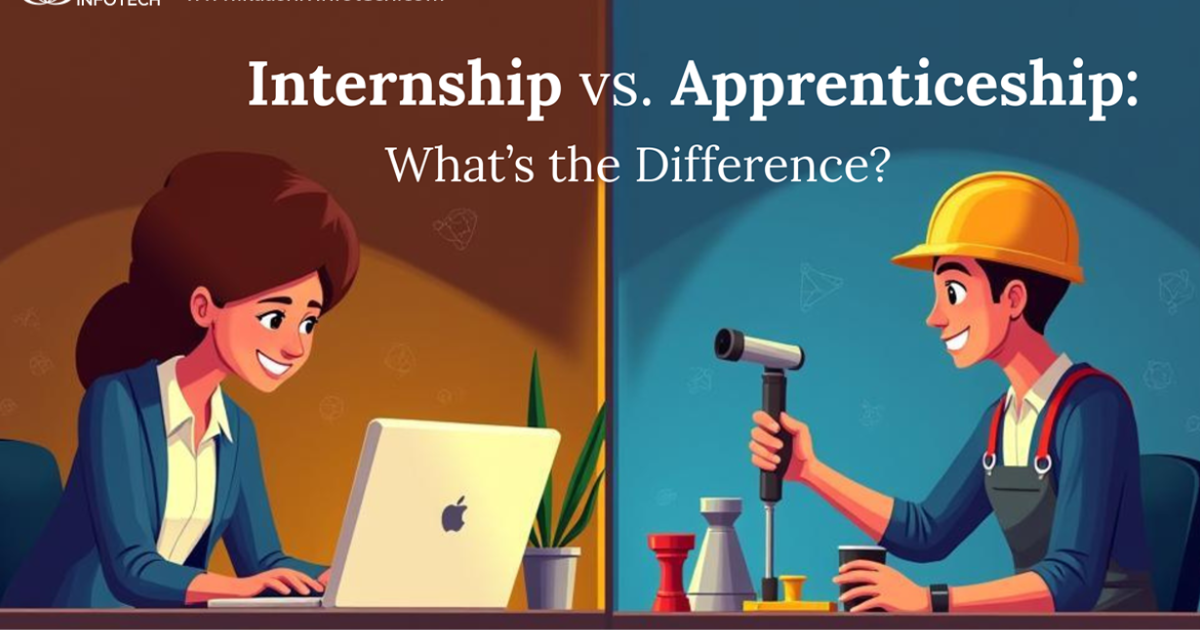
While both offer hands-on learning, there are important differences:
- Duration: Internships are typically short-term, while apprenticeships are long-term commitments.
- Compensation: Apprenticeships are usually paid, whereas internships may be paid or unpaid.
- Structure: Apprenticeships follow a formal training plan with certifications, while internships are more flexible.
- Career Outcome: Apprenticeships often lead directly to full-time jobs, while internships mainly provide experience and exposure.
Benefits of Internships and Apprenticeships
Both options offer significant advantages:
- Practical Experience: Participants gain real-world skills that employers value.
- Career Clarity: Exposure to a profession helps individuals decide if it’s the right career path.
- Skill Development: Communication, teamwork, time management, and technical skills improve through hands-on work.
- Networking Opportunities: Working with professionals helps build valuable industry connections.
- Improved Employability: Candidates with experience stand out in job applications.
How to Choose the Right Option
Choosing between an internship and an apprenticeship depends on your goals:
- If you want short-term experience or are exploring career options, an internship may be the better choice.
- If you are committed to a specific trade or profession and want long-term training with guaranteed qualifications, an apprenticeship is ideal.
Consider your education level, financial needs, and career plans before deciding.
Tips for Making the Most of the Experience
To gain maximum benefit:
- Be proactive and ask questions
- Take feedback seriously and apply it
- Build professional relationships
- Keep track of skills and accomplishments
- Treat the opportunity like a real job
Final Thoughts
Internships and apprenticeships are powerful stepping stones toward career success. They bridge the gap between education and employment by providing hands-on experience, skill development, and industry exposure. Whether you choose an internship or an apprenticeship, both can significantly enhance your career prospects and prepare you for long-term professional growth.